How a $399 Card-Sized Player Changed How America Listens to Music
Twenty-five years after its debut, the original iPod remains a landmark in tech history for solving the problem of carrying a personal music library in a pocket.
By Emily Carter ·
There was a persistent gap in the early 2000s that frustrated tech enthusiasts: you could buy portable music players, but none of them could hold a significant portion of your personal collection without taking up too much space or requiring constant swapping of media. On October 23, 2001, Apple CEO Steve Jobs stood on stage to close that gap. He teased the audience with a "breakthrough digital device that’s not a Mac," setting the stage for a product that would redefine personal entertainment for a generation.
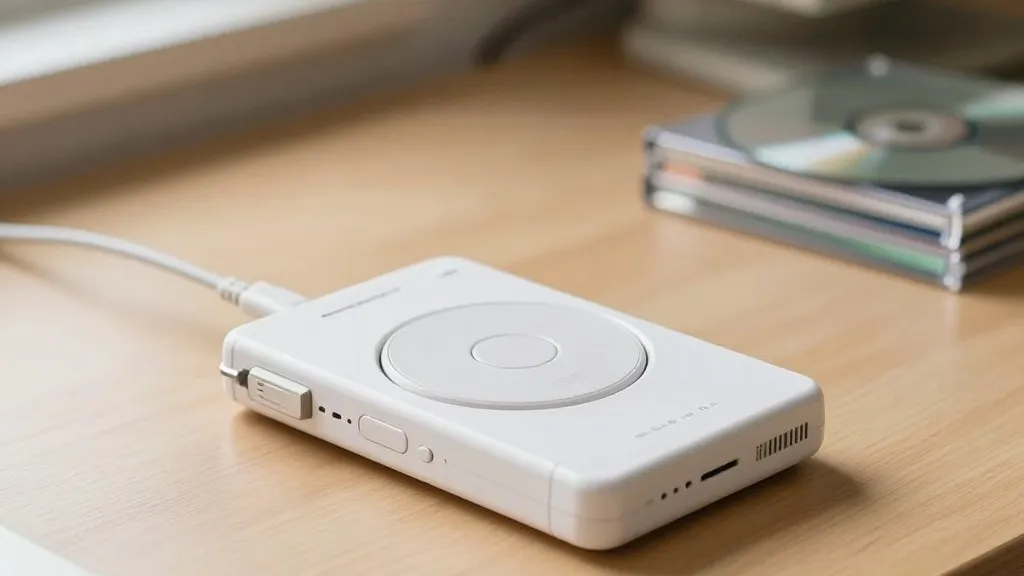
The device revealed was the original iPod, a pocket-sized player that promised to fit an entire music library into a form factor no larger than a deck of cards. Priced at $399, the product targeted a massive market that lacked a clear leader. At the time, the industry was split between CD players, MP3 CD players, flash-based devices, and hard drive jukeboxes. Jobs argued that the hard drive approach was the optimal entry point because it offered the necessary storage capacity for a true music library.
The technical heart of the iPod was a 5-gigabyte hard drive, which allowed it to store approximately 1,000 songs. To put that in perspective, this meant a full thousand typical pop tracks encoded as MP3s at 160Kbps. For many users, this capacity effectively represented their entire personal collection. The device supported the popular audio formats of the day, including MP3, WAV, and AIFF, ensuring compatibility with most of the digital music people already owned.
Achieving this capacity in such a small package required specific engineering. The design relied on a Toshiba ultra-compact hard drive that was 1.8 inches in diameter and just 0.2 inches thick. This component allowed the final device to measure 2.4 by 4 by 0.78 inches and weigh only 6.5 ounces, making it lighter than the cell phones common at the time. The minimalist design featured durable sides and a back, emphasizing a clean aesthetic that was becoming synonymous with Apple products.
Speed was another critical differentiator. The iPod used a FireWire 400 cable for both data transfer and charging, a connection type that was significantly faster than the standard USB ports of the era. Jobs claimed that transferring an entire CD of MP3s took only five to 10 seconds via FireWire, whereas USB connections could take up to five minutes for the same task. Filling the device with 1,000 songs was estimated to take just 10 minutes, compared to five hours on a typical USB player.
The user experience was designed for simplicity and tactile feedback. The device featured a scroll wheel with a piezoelectric clicker that provided physical sensation, allowing users to navigate playlists, artists, or songs with one hand. The interface promised Apple’s "legendary ease of use," making it accessible to non-technical users. The first song demoed on stage was 'Building a Mystery' by Sarah MacLachlan, showcasing the device's audio quality and control responsiveness.
Integration with the desktop was handled through iTunes 2, which launched on the same day. The new software introduced features like MP3 CD burning and, crucially, Auto-Sync. This feature ensured that any library curated on a Mac would automatically stay in sync with the iPod when connected, eliminating the need for manual file management. The device also functioned as an external FireWire hard drive when connected to a computer, adding utility beyond music playback.
Power management was also a focus, with a rechargeable lithium-polymer battery providing 10 hours of continuous playback. Apple stated that an empty battery could be recharged to 80 percent capacity in just one hour, ensuring the device was always ready for the next commute or trip. The combination of speed, capacity, and design created a compelling package that quickly captured the attention of gadget fans.
The original iPod launched at a pivotal moment for Apple, which was emerging from the dot-com bubble with the success of the iMac and iBook. Jobs envisioned the Mac as the center of a digital lifestyle, connecting cameras, camcorders, and now, portable music. While the iPod line would eventually be replaced by the iPhone in 2007 and officially discontinued in 2022, the original 2001 release remains the foundational moment for the portable digital music era.
Twenty-five years later, the impact of that October launch is still visible in how we consume media. The iPod proved that consumers wanted a dedicated, high-capacity device for their music, setting a standard for portability and design that influenced the entire tech industry. It transformed the way people carried their favorite songs, turning a collection of files into a tangible, always-available companion.
Source: Tom's Hardware