5,500 PSI: The Pressure Gauge That Defines Tesla's New Roadster Screen
Tesla's latest interface reveal highlights the extreme pressure requirements for its rocket-powered Roadster, offering a rare glimpse into the cockpit before the 2028 launch.
By Kendra Konchanuk ·
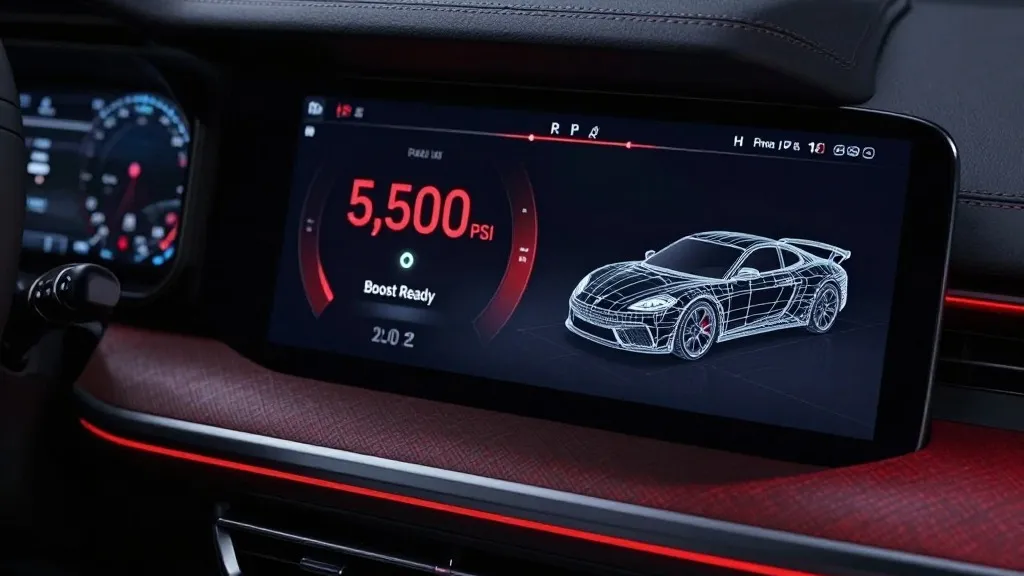
Tesla is wrestling with a complex identity problem for its next flagship vehicle. It is trying to build a car that acts like a fighter jet on the track while still functioning as a daily driver on public roads. The tension between these two modes is now visible on the company’s latest interface update. This new software design forces the driver to manage extreme mechanical forces through a digital dashboard. It is a stark departure from the minimalist maps found in the rest of the lineup.
The core of the new system revolves around a single, critical number: 5,500 PSI. This pressure reading is displayed prominently on the main screen, linked directly to the "Boost Ready" status. It signals when the cold gas thrusters are primed and ready for activation. For the Thrust and Rocket versions, this hardware is fed by carbon-wrapped pressure vessels. The software ensures the driver knows exactly when those vessels are safe and ready to propel the car from 0 to 60 mph in under 0.9 seconds, or under 0.59 seconds for the top-tier model.
Tesla posted a 34-second video on Friday afternoon to X, offering the clearest view yet of the cockpit. The clip begins with a black screen featuring red graphics and a 3D wireframe of the car. This model sits next to the vehicle's squared-off yoke. Tapping different parts of the digital model reveals specific controls. Users can adjust the rear wing to low drag or high downforce positions. A charging page is also accessible, showing a charge limit bar and a compact music player.
The interface is heavily optimized for performance driving. Most of the video focuses on Track Mode. The dashboard displays a live map of the circuit, alongside a list of session lap times. It provides real-time data on brake and motor temperatures. Drivers can also monitor the pressure and temperature of each individual tire. A setup page allows for granular control over the car's physics. Owners can select Auto, Low Drag, High Downforce, or Custom aero modes. They can fine-tune aero balance and brake balance, and even switch off stability and traction control for maximum grip.
This software ties directly to the hardware Tesla showcased near Waco, Texas, on October 15. The base Performance model does not use thrusters. Instead, it relies on a fan and ground sealing system to generate grip. The aero settings visible on the screen correspond to the active wings and suction setup used in that configuration. The interface adapts to the specific hardware installed in the vehicle, ensuring the driver sees relevant data for their chosen version.
The layout of the Roadster is a significant break from Tesla’s other models. Instead of centering the navigation map, the home page places the car itself at the center. Tesla’s official page lists two smaller forward displays that sit alongside the main touchscreen. This arrangement mimics the instrument clusters found in high-performance aircraft. It prioritizes vehicle status over destination information. It is unclear if this specific telemetry setup will ever migrate to the Model 3 Performance or other current vehicles.
The interface is not yet final. Elon Musk stated that production for the Roadster is scheduled to begin in 2028. Until then, the software could undergo further changes. There are also regulatory hurdles to clear. Tesla notes that the flagship Rocket version is not currently approved for public road use. It is designed primarily for track use, while the Thrust version is listed as a limited release and the Rocket is invite-only.
Reservations are currently open, requiring a $50,000 payment. This fee secures a spot in the queue for the next generation of high-performance electric vehicles. The company is moving quickly to generate excitement ahead of the production start. The interface reveal is part of a broader effort to keep the vehicle in the public eye during the development phase. It serves as a tangible proof of concept for the software team's work.
Those who want to see the physical car will have their first opportunity this weekend. The Roadster will be displayed in the lobby of the Petersen Automotive Museum in Los Angeles. The exhibit runs from October 24 to 27, according to Sawyer Merritt. This marks the first time the public will be able to view the vehicle up close. It offers a chance to see the yoke and screens in person, rather than just through a digital video clip.
The combination of the 5,500 PSI gauge and the fighter-jet-inspired layout signals a new direction for Tesla. It moves away from the simple, map-centric interface that defined the Model S and Model 3. The Roadster is positioned as a specialist tool, not a general-purpose family car. The software reflects this focus on precision and performance. As the 2028 launch approaches, this interface will likely evolve, but the emphasis on pressure and thruster readiness appears to be a permanent feature of the design.
Source: Teslarati