Wolves Return To Villages After Forest Loss
Displaced wildlife is moving into Finnish homes following unauthorized land clearing for new AI infrastructure.
By Kateryna Melnyk ·
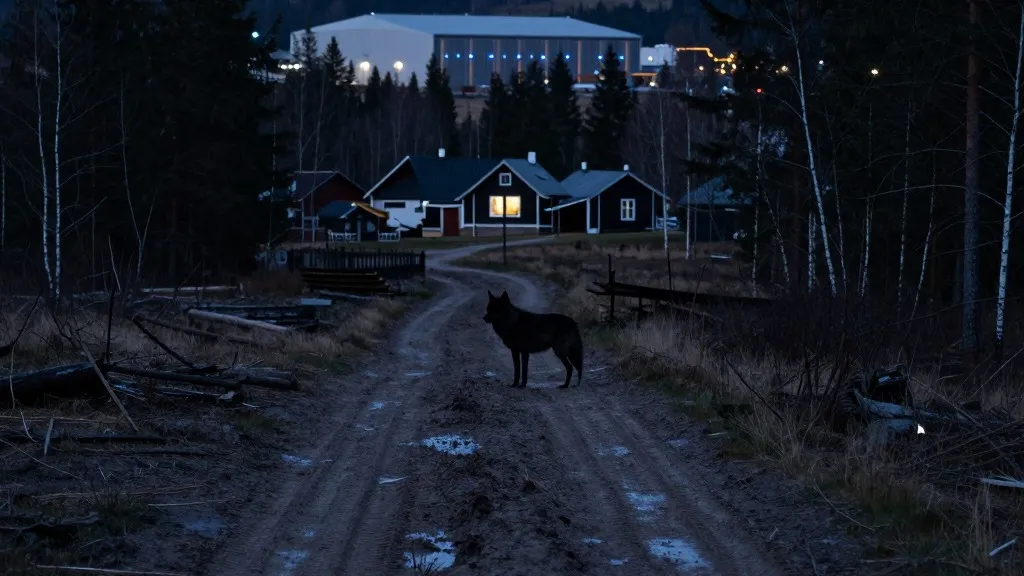
Wolves are back in the village.
The return of large predators to residential areas in Finland has become a tangible consequence of rapid technological expansion. Local residents report that wolves and other wild animals have started roaming into neighborhoods near the village of Otanmäki. This shift is directly linked to the destruction of their natural habitat. Google, the American search and AI giant, is at the center of this controversy. The company has been building new data centers in the region with speed and scale that have outpaced local regulatory oversight.
The core issue involves a significant loss of forested land. Approximately 1,300 acres of forest have been cleared for these projects. In the area near Muhos, 816 acres of once-dense woodland have been transformed into a vast expanse of mud. This physical alteration has left the land barren and unstable. The Finnish Licensing and Supervision Authority, known as LVV, has stepped in to address the situation. They issued an order for Google to cease work in areas where roughly 500 acres had already been cleared. This location is situated 55 miles southeast of Otanmäki.
Local anger is simmering over the environmental damage. The company appears to have moved quickly, potentially bypassing standard environmental safeguards. Anni Ranta, a 53-year-old resident whose family has lived in Otanmäki for generations, described the direct impact on daily life. She noted that the wild animals moved out of the forest because their home was gone. Ranta stated, “We had wolves coming into the village because all the wild animals moved out of the forest.” Her comments highlight a serious human safety concern for families living near these sites.
Ranta also expressed broader geopolitical concerns. She fears that the presence of U.S.-owned data centers makes Finland a more attractive target for Russian aggression. This adds a layer of strategic anxiety to the environmental complaints. The Finnish Association for Nature Conservation, referred to as SLL, has weighed in on the matter. A representative for the group indicated that Google’s handling of environmental policy has been unprecedented and clear in its deviation from norms. The regulatory body, LVV, seems to agree with this assessment given their recent orders.
The complaints from locals extend beyond just the appearance of wolves. Residents have voiced grievances about the noise from construction and factory operations. They have also reported that local streams have turned brown, suggesting soil erosion and pollution. Rare bird species are being pushed out of their traditional territories. These issues mirror concerns raised in the United States and other countries where AI infrastructure is expanding. The pattern suggests a recurring tension between rapid tech growth and local environmental stability.
Google has responded to the regulatory pressure with a tone of cooperation. A spokesperson for the company stated that they would fully comply with the requests from the LVV. The company looks forward to maintaining an active and open dialogue with all authorities. They aim to strengthen their partnership with Finland and local organizations. This upbeat response contrasts with the skeptical views of local conservation groups. Google likely hopes that the promised business benefits of the data centers will sway the government and regulators in its favor.
This is not the first time these specific projects have been reported. Earlier this month, the Finnish government gave notice to Google to stop construction activities in Muhos and Kajaani, which is near Otanmäki. The current situation underscores the ongoing friction between global tech ambitions and local ecological realities. The displacement of wildlife serves as a visible reminder of the physical footprint left by digital infrastructure.
As the story unfolds, several open questions remain. Will the cessation of work lead to a full remediation of the cleared land? How will the local wildlife population recover its habitat? The mud flats that replaced the forest represent a significant change in the landscape. The return of wolves to the villages signals that the ecosystem is reacting to these human interventions. Residents are left to navigate a new normal where the boundary between the wild and the domestic is blurring.
The situation in Finland offers a case study for other regions planning similar expansions. The speed of construction and the scale of land use are critical factors. Regulatory bodies must balance economic incentives with environmental protection. The voices of long-term residents like Ranta provide essential context that data alone may not capture. The interplay between technology, nature, and local governance continues to evolve in complex ways.
Source: Tom's Hardware